
 Schweiz
Essential and Ancillary Airport Infrastructure
Martin Andreas K. Facts checked Jonas Felix H.
Airport infrastructure includes all the facilities, systems and services required to operate an airport safely and efficiently. It covers everything from runways and air traffic control systems to passenger terminals, baggage handling and ground transportation. Depending on its size, location and purpose, an airport may also offer additional amenities designed to improve the passenger experience and generate revenue. Understanding the difference between essential and optional infrastructure helps explain how airports operate and what determines their capacity, safety and commercial potential.
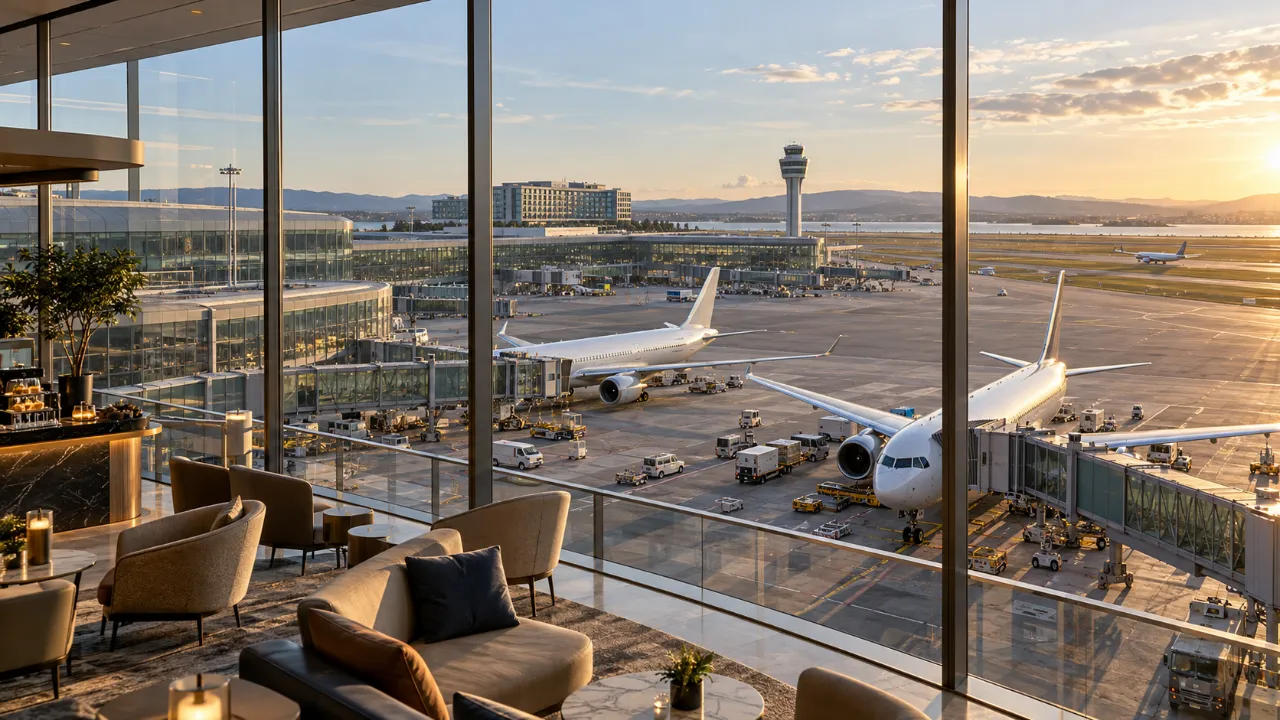
Essential Airport Infrastructure
Essential airport infrastructure comprises the facilities and systems required for aircraft operations, passenger processing, security and the reliable movement of people and goods. Although the exact requirements vary according to airport size, traffic volume and applicable regulations, several core infrastructure categories are common to most commercial airports.
Runways, Taxiways and Aprons
Runways are among the most important elements of an airport because they provide the surfaces aircraft need for take-off and landing. Their length, width, surface condition and supporting equipment must be suitable for the aircraft types using the airport and the prevailing operating conditions. Taxiways connect runways with aprons, hangars and other operational areas, while aprons provide space for aircraft parking, boarding, loading and servicing.
The design and capacity of this infrastructure directly affect how many aircraft an airport can handle and how efficiently they can move on the ground. Runway lighting, markings, signs and drainage systems support safe operations in different weather and visibility conditions. Regular inspections and maintenance are essential to minimise operational disruptions and reduce the risk of accidents.
Air Traffic Control and Navigation Systems
Air traffic control facilities coordinate aircraft movements in the air and on the ground, helping maintain safe separation between aircraft and managing traffic flows. Depending on the airport, these facilities may include a control tower, approach control services and other air traffic management systems. Navigation aids, surveillance equipment, communication systems and meteorological instruments support pilots and controllers during different phases of flight.
Reliable communication and navigation infrastructure is essential for operational safety, particularly at busy airports and in challenging weather conditions. These systems also influence airport capacity by helping coordinate arrivals, departures and ground movements. Their technical requirements depend on the airport's traffic levels, airspace organisation and applicable aviation standards.
Passenger Terminals and Baggage Handling
Passenger terminals provide the facilities needed for travellers to move through an airport before departure and after arrival. They typically include check-in counters, security screening areas, passport control where applicable, departure gates, arrival halls and baggage reclaim areas. Larger airports may also have transfer zones, self-service kiosks, automated border control and dedicated facilities for passengers requiring assistance.
Baggage handling systems connect check-in areas with aircraft loading operations and ensure that checked luggage is sorted and transferred to the correct flights. Their efficiency affects processing times, connection reliability and the risk of baggage delays or loss. Terminal layout, passenger flow management and sufficient processing capacity are particularly important during peak travel periods.
Security, Emergency Services and Ground Support
Airport security infrastructure includes passenger and baggage screening equipment, access control systems, surveillance cameras and restricted areas for authorised personnel. Airports also require appropriate emergency response arrangements, including aircraft rescue and firefighting services, medical assistance and procedures for dealing with incidents. Depending on the airport's operations, additional facilities may include perimeter protection, emergency coordination centres and specialised inspection areas.
Ground support infrastructure enables aircraft to be prepared for departure and serviced after landing. It can include ground power units, passenger boarding bridges, baggage vehicles, aircraft towing equipment, de-icing facilities and maintenance areas. The availability and coordination of these services affect turnaround times, operational reliability and the airport's ability to maintain its scheduled traffic.
Optional Airport Infrastructure
Beyond essential aviation facilities, many airports provide additional services designed to make waiting times more comfortable, attract visitors and generate commercial revenue. These amenities are not necessary for aircraft operations, but they can improve the passenger experience and help airports diversify their income. Their availability depends on the airport's size, location, passenger profile and business strategy. Optional airport infrastructure can include:
- Shopping and duty-free retail: Shops selling perfumes, cosmetics, electronics, clothing, souvenirs and travel essentials.
- Restaurants, cafés and bars: Dining options ranging from fast food and takeaway counters to full-service restaurants.
- Airport lounges: Quiet spaces with comfortable seating, refreshments, work areas and additional services for eligible passengers.
- Hotels and sleeping facilities: Airport hotels, transit accommodation, sleeping pods and short-stay rooms for passengers with long layovers.
- Entertainment and leisure: Gaming areas, cinemas, art exhibitions, museums, children's play areas and relaxation facilities.
- Wellness and fitness: Spas, massage services, showers, gyms and other facilities intended to help passengers relax.
- Business and conference facilities: Meeting rooms, co-working spaces and conference centres for business travellers.
- Premium passenger services: Fast-track security, concierge assistance, private terminals and VIP transfer services.
- Additional transport and parking options: Premium parking, car rental services, shuttle connections and other convenient ways to reach the airport or continue a journey.
These facilities can make an airport more attractive to passengers, especially those facing long layovers or frequent travel. They can also generate revenue through retail leases, concessions, service fees and partnerships with commercial operators. However, airports must balance the benefits of optional amenities against operating costs, available space, passenger demand and local regulations.
Casinos at Airports
Casinos are an unusual form of optional airport infrastructure, as they combine entertainment with regulated gambling. Full casino facilities are rare inside airport terminals, but some airports offer slot machines or dedicated gaming areas where local laws permit them. These facilities can provide entertainment during a layover and generate additional commercial income, although access restrictions and minimum-age requirements apply. Well-known examples of airport gambling facilities include:
- Harry Reid International Airport — Las Vegas, USA: Slot machines and designated gaming lounges throughout the terminals.
- Reno-Tahoe International Airport — Reno, USA: Gaming machines located in several areas of the terminal.
- Larnaca International Airport — Cyprus: C2 Larnaca was launched as a satellite casino in 2018, with slot machines in the airport terminal. Its current operating status should be verified before planning a visit.
A distinction is important when discussing airport casinos: a terminal with slot machines is not necessarily a full casino with table games such as roulette or blackjack. Las Vegas and Reno are well-known examples of airports with gaming machines, while Larnaca has hosted a dedicated satellite casino. Amsterdam Schiphol also had a Holland Casino branch, but it closed in March 2017, so it should be mentioned as a historical example rather than a current facility.